Satyajit Ray Biography - Childhood, Life Achievements & Timeline Satyajit Ray, Bengali motion-picture director who brought the Indian cinema to world recognition with Pather Panchali (1955; The Song of the Road) and its two sequels, known as the Apu Trilogy. He was noted for his humanism, his versatility, and his detailed control over his films and their music.A Century of Satyajit Ray - Frontline Satyajit Ray's ancestry can be traced back for at least ten generations. [14] His family had acquired the name "Ray".Although they were Bengali Kayasthas, the Rays were "Vaishnavas" (worshippers of Vishnu), [14] as opposed to the majority of Bengali Kayasthas, who were "Shaktos" (worshippers of the Shakti or Shiva).Satyajit Ray Biography: Early Life, Education, Awards, Career ... Ray also edited Sandesh, a children’s magazine and wrote numerous fiction and nonfiction works. In 1992 he received an honorary Academy Award. This short biography with a focus on cinema and his growth as a filmmaker, is organised as under: Growing up, 1921-39; At Shantiniketan, 1940-42; Advertising & Graphic Design, 1943; Calcutta Film. Satyajit ray essay in english
Satyajit Ray, Bengali motion-picture director who brought the Indian cinema to world recognition with Pather Panchali (; The Song of the Road) and its two sequels, known as the Apu Trilogy. He was noted for his humanism, his versatility, and his detailed control over his films and their music. Satyajit ray biography in english pdf
Satyajit Ray (Bengali pronunciation: [ˈʃotːodʒit ˈrae̯] ⓘ; 2 May – 23 April ) was an Indian film director, screenwriter, author, lyricist, magazine editor, illustrator, calligrapher, and composer. Ray is widely considered one of the greatest and most influential film directors in the history of cinema.
Biography of satyajit ray in 100 words
Satyajit Ray, standing 6′-4″ tall, was a towering figure in the world of cinema. He studied at the university in Calcutta and later joined Shantiniketan, Rabindranath Tagore’s university to study art. He began his career as a commercial artist (). 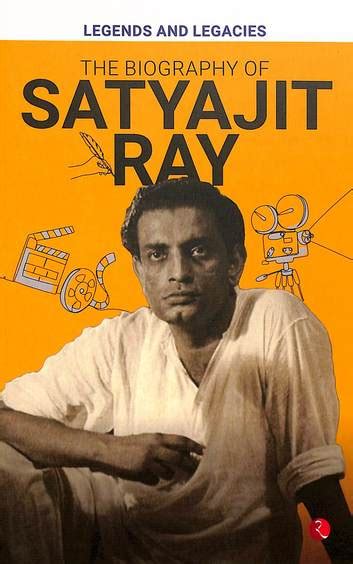
Satyajit ray education
A film director, writer, illustrator, graphic designer and music composer, Satyajit Ray was born on May 2, into the illustrious Ray (earlier Raychaudhuri) family which had gained considerable prominence for their contributions to art, literature, music and to the printing technology. Satyajit Ray, (born May 2, 1921, Calcutta, India—died April 23, 1992, Calcutta). Ray directed 36 films which included several documentaries and short films as well. He tends to explore the several facets of civilization and human sentiments, capturing the essence of the human mind, building up a kaleidoscopic view of the many faces of the characters that he created.
Ray was born in Calcutta to author Sukumar Ray and Suprabha Ray. Starting his career as a commercial artist, Ray was drawn into independent film-making after. Satyajit Ray. Writer: Pather Panchali. Satyajit Ray was born in Calcutta on May 2, 1921. His father, Late Sukumar Ray was an eminent poet and writer in the history of Bengali literature. In 1940, after receiving his degree in science and economics from Calcutta University, he attended Tagore's Viswa-Bharati University. His first movie Pather Panchali (1955) won several International Awards and.
Satyajit ray paragraph
Satyajit Ray. Writer: Pather Panchali. Satyajit Ray was born in Calcutta on May 2, His father, Late Sukumar Ray was an eminent poet and writer in the history of Bengali literature. In , after receiving his degree in science and economics from Calcutta University, he attended Tagore's Viswa-Bharati University. Satyajit ray death
Fondly remembered as Bengal’s Renaissance man, Satyajit Ray was a renowned Indian filmmaker. Coming from a distinguished family of artists, litterateurs and musicians, Satyajit Ray, from young age, showed signs of making it big in the world of entertainment.
Biography of satyajit ray in 200 words
Satyajit Ray is one of the most famous and influential filmmakers in world cinema. With his masterful storytelling, distinct visual style and humanistic approach, he went on to become one of the greatest filmmakers in the history of Indian cinema.